Amaryllis Care After Blooming: What to Cut and What to Keep
See which parts of an amaryllis to trim after blooming, when to keep green leaves, and how care changes for a rooted plant or a wax-covered gift bulb.
When the last trumpet fades on a potted amaryllis, remove the spent flower and keep the healthy leaves. If the flower stalk is still green, leave it for now. The bulb has just used its reserves to flower, and the green parts help replenish them.
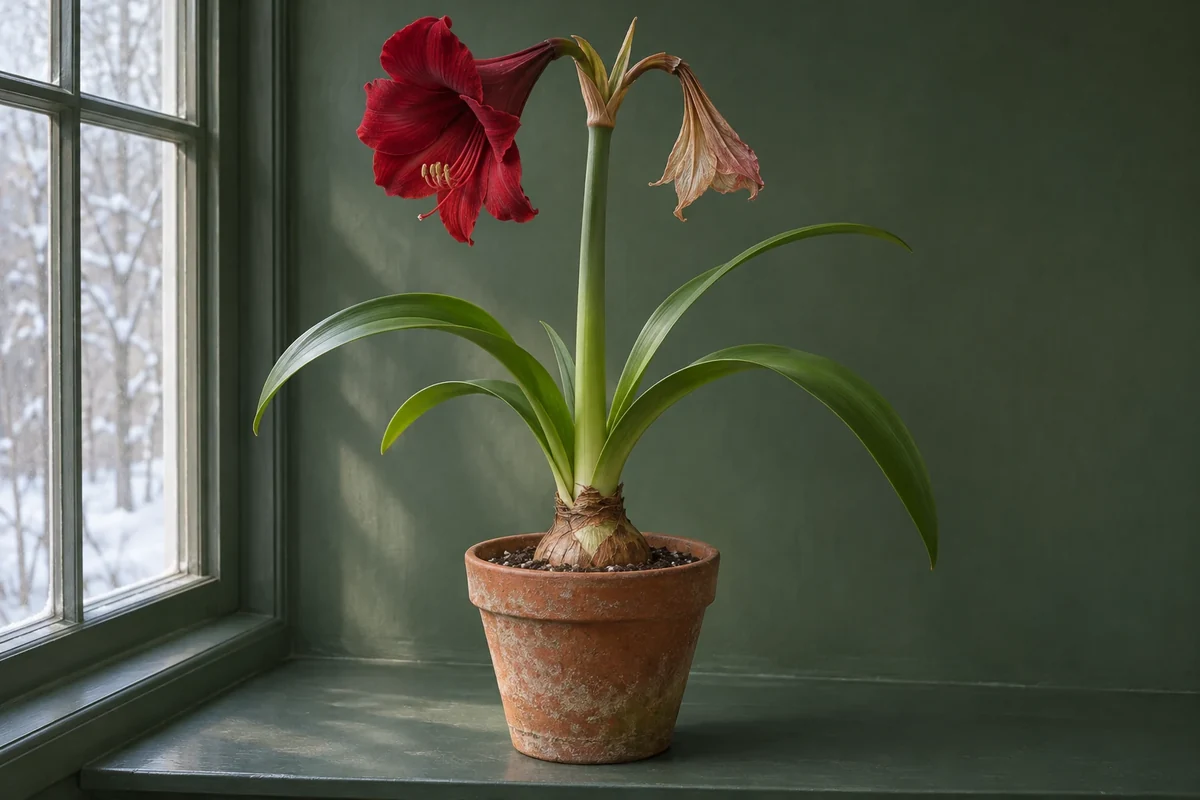
Decide what to cut by looking at the plant
| What you see | What to do today |
|---|---|
| One wilted flower and another bud on the same stalk | Remove the spent bloom. Leave the bud and its stalk. |
| All flowers gone, stalk still green | Remove the spent flowers and leave the green stalk. |
| Flower stalk has yellowed | Trim the yellow stalk carefully, keeping the separate leaves intact. |
| Long, healthy green leaves and no flowers | Move the pot to a bright, sunny window and keep it growing. |
Keep a rooted bulb in a pot that drains. Water when the surface starts to dry, let the excess drain and empty the saucer. As new growth develops, follow the feeding guidance for a growing amaryllis. A room that looked perfect for the flowers over dinner may be too dim for months of leaf growth.
Decide whether you want to time the next bloom
For the simplest routine, keep the plant growing. The University of Minnesota notes that amaryllis can flower again without a forced rest. If it spends summer outside, introduce it gradually after frost danger has passed and bring it in before autumn frost.
To aim for a particular season, first give the leaves a growing season to rebuild the bulb. Minnesota Extension describes a rest in a dry, dark place at 50–60°F for 8–12 weeks, with water withheld. Trim dry foliage once it browns. Return the pot to a sunny location if new growth appears earlier, or after the rest. A sufficiently replenished bulb may flower about four to six weeks after dormancy. Put a reminder on the calendar to check the bulb; the flower date can vary.
If the gift came as a wax-covered bulb
Look underneath for wax rather than potting mix and a drainage hole. A freestanding waxed bulb flowers on stored energy and usually needs no water while on display. Iowa State describes these as single-use gift bulbs. Saving one is an experiment, particularly if the root-producing base was damaged. Avoid pouring water around its wax shell. If you compost the spent bulb, remove wax, glitter and decorative hardware first.
For a holiday group display that includes another plant, keep each pot accessible for its own watering routine. The poinsettia display guide shows how to arrange separate pots.
For winter flowers that can start in a glass vessel of stones, see how to grow paperwhites in pebbles.
Sources & what to check
Source details checked 2026-11-19. Availability and prices can change; use the links below for current information.