File Scrapbook Paper Scraps by the Cut You Can Still Make
Use three paper templates to sort scrapbook scraps by the pieces you can cut from them.
Put the shapes you cut most often on your desk before you empty the scrap bin. A patterned strip that looks too narrow for a mat might be exactly right for a border. File scraps by the next usable cut, then sort by color inside those groups if you have room.
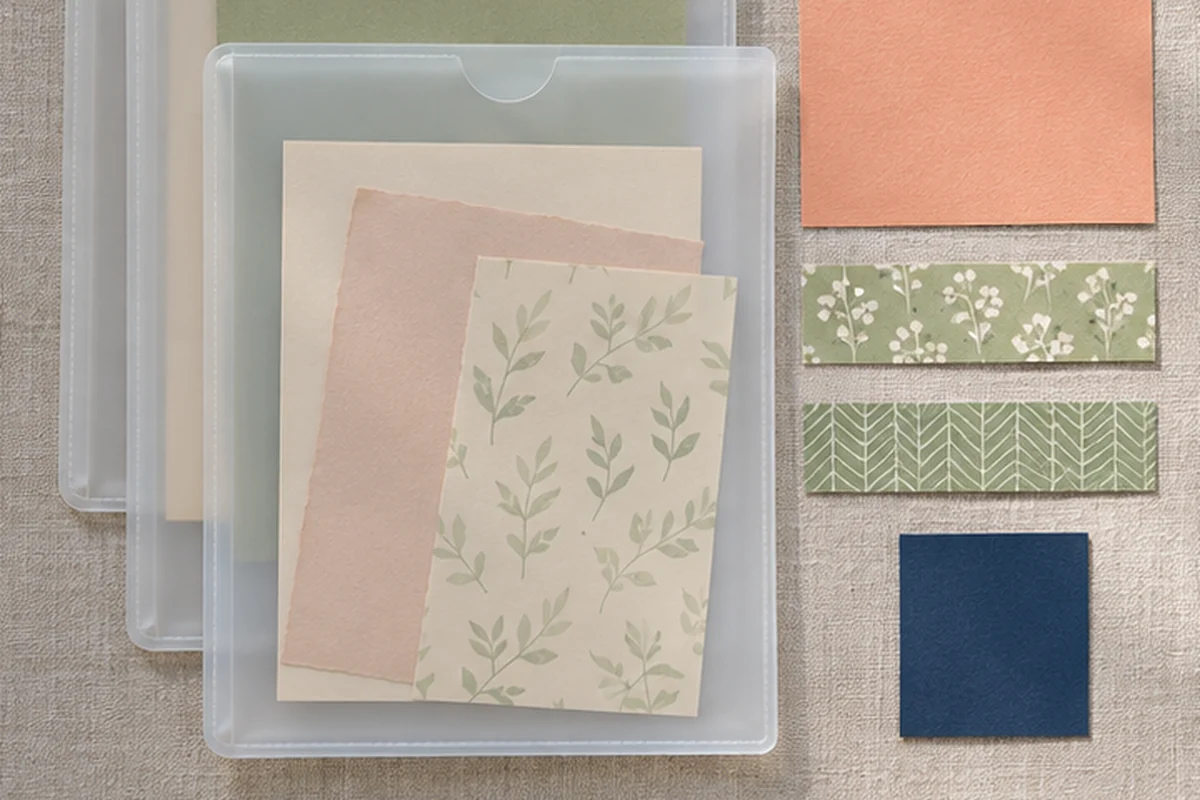
Cut three reusable gauges
For this example, cut a 4 × 6 inch backing rectangle, a 1 × 6 inch border strip and a 2 × 2 inch square from waste cardstock. Write each size on its gauge. Choose different sizes if your actual layouts use other pieces. Trace around the gauges only when you’re ready to cut the paper.
File an awkward piece
Take an L-shaped offcut whose outer edges measure 5 × 7 inches. Lay the backing gauge on it. If the missing corner shows underneath, try the strip gauge along the long arm. Rotate the square on the remaining area. File the whole scrap behind the largest useful shape for your planned layout. Keep directional patterns facing the way they must appear.
Keep the pockets easy to empty
Use a small envelope inside a file pocket for squares that disappear below the rim. Give long thin strips a stiff backer so their ends stay straight. At the next layout, pull from these pockets before cutting a new full sheet.
Storage Studios’ expandable 12 × 12 organizer has tabbed pockets. Its full-sheet format works for larger scraps; small pieces still benefit from a separate inner envelope. Product details.
Related guide: building a scrapbook layout around a 4 × 6 photo.
Sources & what to check
Source details checked 2026-11-23. Availability and prices can change; use the links below for current information.