How many bags of concrete for a fence-post hole?
Estimate concrete bags for a round post hole using actual post width and the mix's bag yield. See 60- and 80-pound examples and rounding choices.
The bag count depends on the space being filled and the yield of your specific mix, not just the height of the fence. For a round hole with a square post, calculate the hole’s volume, subtract the part occupied by the post, divide by the bag yield and round up.
A hypothetical 10-inch-diameter hole filled to 24 inches around a 3.5-inch-square post needs about 0.921 cubic feet before an extra allowance. Using the documented yields for QUIKRETE Concrete Mix No. 1101, that is three 60-pound bags or two 80-pound bags, rounded for one hole. These dimensions illustrate quantity only; they do not specify a suitable hole for your fence.
Estimate bags for your measured hole
Round cylindrical hole with a square post through the fill depth. Quantity estimate only: hole dimensions and installation requirements must come from your project. Inputs stay in your browser.
Enter the concrete fill depth, which may differ from the total excavated depth if the design includes a separate bottom layer. Enter the post’s actual measured width, not a nominal lumber size. This version assumes a square post extending through the entire fill depth and identical cylindrical holes.
It rejects a post whose corners do not fit inside the round hole. That is a geometry check, not a design assessment.
Calculate the concrete volume
With every length measured in inches:
Concrete cubic feet = (π × (hole diameter ÷ 2)² − post width²) × fill depth ÷ 1,728
There are 1,728 cubic inches in one cubic foot. The formula subtracts the square post’s cross-sectional area before multiplying by depth. Use a different calculation for a round post, an irregular hole, a footing or a post that does not occupy the whole depth.
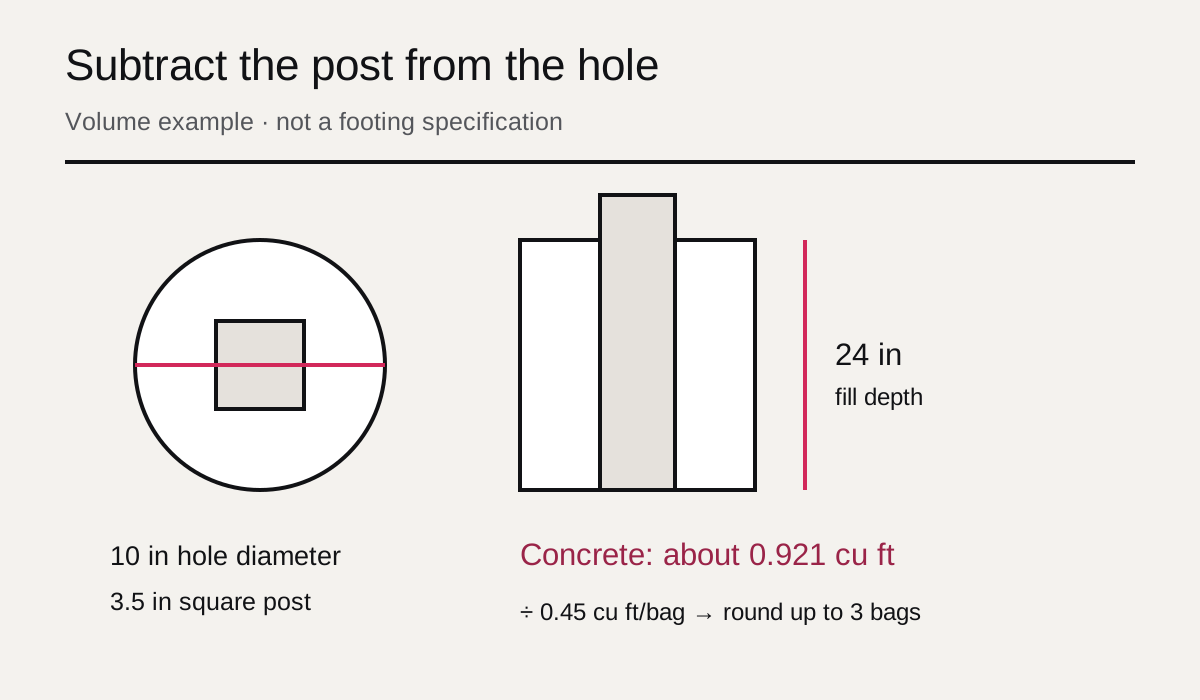
Quantity example only. Dimensions are hypothetical, not a footing design.
For the example, the hole’s cross-sectional area is π × 5² ≈ 78.54 square inches. The post occupies 3.5² = 12.25 square inches. Multiply the difference by 24 inches and divide by 1,728: about 0.921 cubic feet.
Use the yield for the exact mix
The linked QUIKRETE specification sheet gives these approximate yields for Concrete Mix No. 1101:
| Bag weight | Approximate yield | Bags for the example hole, no extra allowance |
|---|---|---|
| 40 lb | 0.30 cu ft | 4 |
| 60 lb | 0.45 cu ft | 3 |
| 80 lb | 0.60 cu ft | 2 |
Do not assign these yields to every concrete product with the same bag weight. A fast-setting mix, mortar or other blend can have different specifications and instructions. The manufacturer’s general calculator also separates project and product types.
Use the yield printed for the mix you intend to buy. Bag weight tells you what you will handle; yield tells you how much volume the prepared mix is expected to fill.
Round one hole or the whole project?
For four identical example holes, the unrounded total is about 3.683 cubic feet. At 0.45 cubic feet per bag, rounding the combined project gives nine 60-pound bags before any extra allowance.
Rounding each hole separately gives three bags per hole, or twelve bags. Both calculations are shown because they answer different purchasing questions. The combined total assumes you can use material across the holes without discarding each hole’s remaining quantity. The separately rounded total treats every hole as its own batch.
Do not divide a rounded one-hole estimate by a bag weight ratio and expect an exact answer. Keep the volume unrounded, use the new product’s yield, then round again.
Account for the hole you actually have
A wider section, uneven sides or losses can increase the amount needed. The tool lets you enter an extra allowance, but no fixed percentage guarantees the result. Measure the actual geometry and review the plan before relying on the count.
If the design needs a collar, footing or a different fill profile, add that volume using the appropriate shape. Do not change installation dimensions just to match the number of bags on hand.
Check quantity and installation separately
Hole dimensions, soil, frost conditions and the fence design must be resolved outside this calculator. Follow the selected product’s instructions for mixing, placement and curing; a quantity result does not mean that dry pouring or another method is appropriate.
Before buying, check the exact mix, bag yield, package weight, delivered price and required equipment. When comparing sellers, compare the same product rather than assuming a cheaper bag has the same yield.
Our links are ordinary sources, not active affiliate purchase links. For another useful quantity calculation, see how much paint a room needs for two coats. That guide uses the same discipline: calculate the full requirement, then round to the available packages.
Sources & limitations
Product and documentation checks: 2026-10-12. Availability and prices can change. Read the linked sources for the current details.
Tested arithmetic for a cylindrical hole and square post; no post was installed. Example dimensions are not structural recommendations. This does not determine frost depth, footing design, soil suitability, permits or mixing method.