Indoor Plant Shelf Ideas: A Three-Pot Layout You Can Maintain
Arrange three plants on a 24-inch shelf with room for light, leaves and watering. Use the spacing example, removable inner pots and an optional humidity log.
Choose an indoor plant shelf for the light your plants need and the space it takes to care for them. Start with two or three pots, keep each one removable, and leave enough room above the foliage to lift the inner pot out. A shelf that looks full while the plants are small may be awkward to water a few months later.
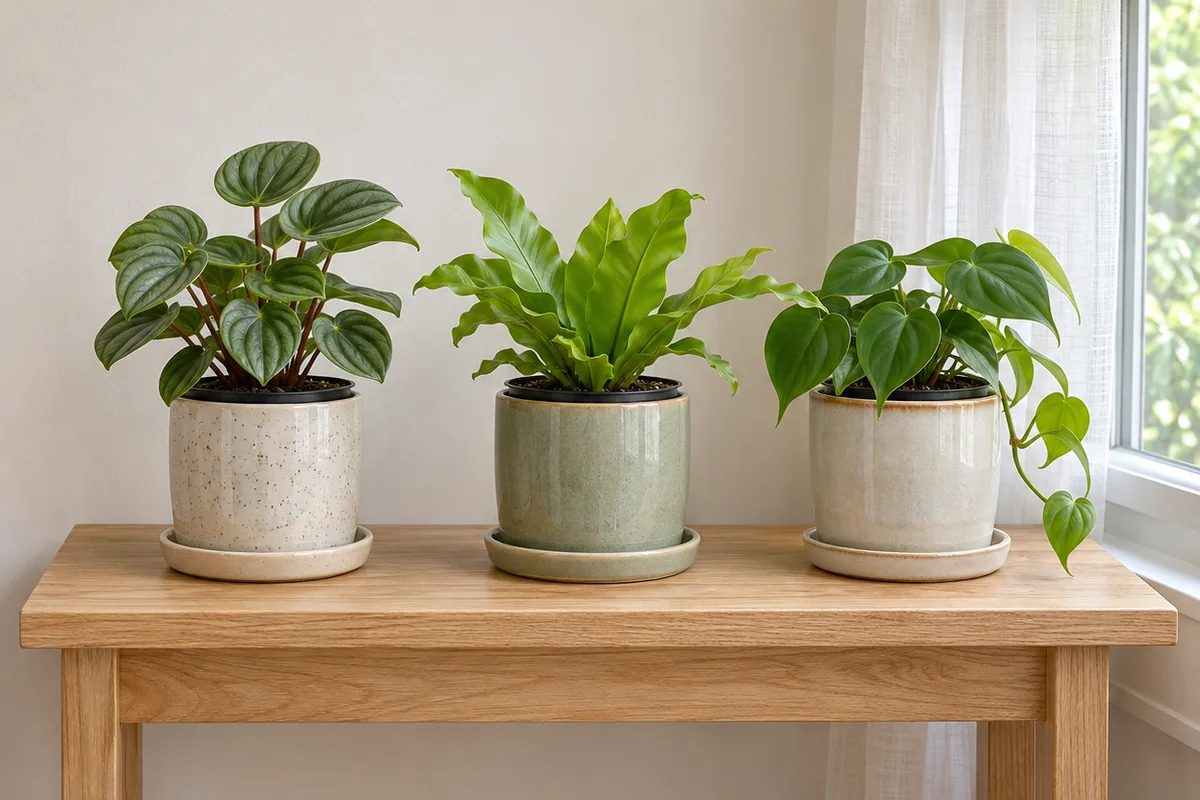
For a simple display, repeat one pot color and vary the plants’ shapes: one upright, one rounded and one with a short trail of leaves. Choose plants whose light needs fit the actual shelf. Their watering routines can still differ, so keep them in separate pots rather than combining them in one decorative container.
Look at the shelf in daylight first
Check the proposed spot in the morning, around midday and later in the day. Notice whether sunlight reaches the leaves, whether a curtain covers the window and whether the shelf above shades the one below. A bright-looking room does not give every shelf the same conditions.
University of Minnesota Extension recommends matching a plant’s requirements to the available light. Use the plant’s identification and care guidance to decide whether that spot is suitable. If you cannot identify a plant, settle that before assigning it a permanent place.
Avoid building the display around a dark corner and hoping that every plant will adapt. Use a suitable plant light with its placement instructions if you intend to grow there, or keep that part of the shelving for books and decorative objects. A lamp chosen for room atmosphere has not automatically been selected for plant growth.
A three-pot layout for a 24-inch shelf
This arrangement uses an existing shelf with 24 inches of usable width and 10 inches of usable depth, plus three round saucers measuring 6 inches across. Check the shelf manufacturer’s permitted load and installation requirements, including the filled pots, water and outer containers.
The three saucers occupy 18 inches across the shelf. The remaining 6 inches can form four 1½-inch spaces: one at each end and one between each pair. Centering a 6-inch saucer on the 10-inch depth leaves 2 inches at the front and back. These measurements describe the saucers; leaves and your hands need more room.
| Position | Starting arrangement | What can change it |
|---|---|---|
| Left | Upright compact plant, saucer center 4½ inches from the left edge | Move or omit it if its leaves block the window or the neighboring plant |
| Middle | Rounded compact plant, center at 12 inches | Leave it out if you cannot reach the pots beside it |
| Right | Short trailing plant, center at 19½ inches | Keep stems out of the route used to remove the pot |
Lay out the saucers first, then add the plants. Remove and return each pot while the others stay in place. If the foliage catches, reduce the display to two plants. Do not force the three-pot example onto a narrower shelf. A smaller group with visible space around it can still make a finished arrangement.
On a taller shelving unit, try one upright plant on a lower, well-lit level and a trailing plant at an upper edge. Check the actual light at each position and keep every pot within comfortable reach. The top shelf does not need a plant if you cannot lift it down easily.
Make watering possible without rearranging everything
A decorative outer pot can hold a slightly smaller nursery pot with drainage holes. Iowa State Extension describes this double-pot arrangement as a way to keep drainage while using an outer container without a hole. Check that you can grip and lift the inner pot; a tight rim or long trailing stems can make an otherwise attractive pairing impractical.
When a plant needs water, take its inner pot to a suitable watering area, let excess water drain, and return it to an empty outer pot. Empty collected water from saucers or cachepots. Keep the supporting shelf dry and use a protective saucer appropriate to its material.
Check plants individually rather than watering every pot because it is shelf-cleaning day. The useful weekly routine is to inspect the plants, check their needs, clean up and return them to their chosen positions. The amount and timing of water depend on the plant and its growing conditions.
Use a humidity reading only when it answers a question
If you want to understand the air conditions beside the display, an inexpensive hygrometer can add a temperature and relative-humidity record. It does not measure light or moisture inside the pot, and it does not tell you when to water.
Govee H5075 Bluetooth Hygrometer Thermometer, 1 Pack (Paid link) is an optional example with an on-device display, Bluetooth connection to Govee Home and CSV export of recorded data. This link selects the single-device pack. Govee’s FAQ specifies Bluetooth rather than Wi-Fi, so do not choose it for internet monitoring from elsewhere.
Record the time, shelf position, temperature and humidity over several ordinary days. Note unusual conditions such as an open window or heating running nearby. Use the record alongside guidance for the particular plant; there is no single humidity target for every plant on a shelf. If the only unresolved issue is that a pot cannot be lifted out, rearranging the display is the useful next step.
Two decisions to make before calling the shelf finished
For the three-pot example, suppose the plants fit and each inner pot lifts out cleanly. Keep the arrangement, then check that the light suits all three plants over the day. Save a quick photo after you finish so you can return the pots to the same layout after watering. The result is a display with known positions and a workable care routine.
Now consider a succulent that needs brighter light on a shaded lower shelf. More humidity monitoring cannot supply the missing light. Move it to a suitable brighter position, assess an appropriate plant light, or replace it in the display with an object while you reconsider the plant choice. Leave the rest of the composition alone if it is working.
If moving plants off a busy worktop created this shelf project, use our kitchen counter organization guide to give the newly open surface a useful job instead of filling it again.
Sources & what to check
Source details checked 2026-11-15. Availability and prices can change; use the links below for current information.