Kitchen Counter Organization: Keep a Useful Prep Area Clear
Organize a kitchen counter by daily tasks. Compare a small tray and utensil holder, limit countertop clutter and keep a usable area for food preparation.
For kitchen counter organization, protect a clear prep area first, then group only the tools and supplies used there every day. A small tray gives a few loose items a boundary; an utensil holder can keep regular cooking tools close; a cupboard is often the better place for occasional appliances. More countertop storage is helpful only when it releases a useful surface or simplifies a repeated task.
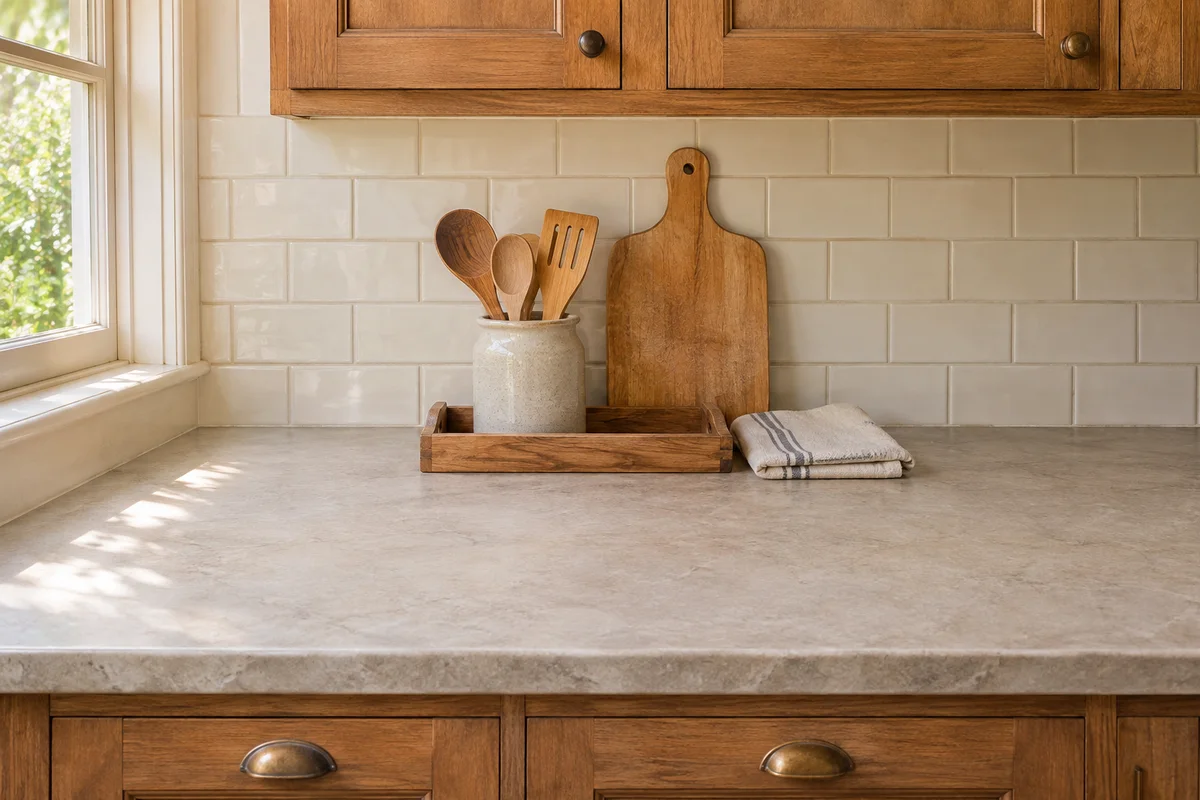
Clear one stretch of counter and prepare a normal meal. Notice which items you reach for and which objects you have to move before chopping, mixing or putting down groceries. Use that routine to decide what deserves to remain out.
Divide the counter by tasks
| Zone | Keep close | Consider moving elsewhere | Useful boundary |
|---|---|---|---|
| Main prep area | Tools needed for the current task | Mail, refill packs and occasional gadgets | A deliberately clear stretch of worktop |
| Daily drinks | The items used for your usual drink | Extra mugs and unopened supplies | One tray, if it improves access |
| Cooking tools | A small working selection | Duplicate and rarely used tools | A suitable utensil holder or drawer |
| Washing-up area | Products intended for that location | Unrelated decorative objects | A cleanable organizer that fits the surface |
These zones can overlap in a very small kitchen. Their purpose is to make the next task easy, not to allocate a new tray to every category.
Two small products with different roles
IKEA OSTBIT bamboo tray, article 103.767.24 was listed at $7.99 on November 3, 2026. The selected 8 × 11-inch tray has a stated height of 1 inch. IKEA specifies wiping it with a damp cloth. It can define a small group of dry countertop items; do not treat its rim as proof that it is a waterproof spill tray.
The OXO Stainless Steel Rotating Utensil Holder, SKU 1386400 was listed at $26.99. OXO describes a rotating body, a contoured bottom and non-slip feet, with listed dimensions 5.25 × 5.25 × 6.125. Confirm the measurement units and usable interior on the current listing before relying on a tight fit. Long or broad tool heads can occupy more space than the base.
These examples illustrate a boundary for loose items and a home for upright tools. They are not a matched set or a recommendation to buy both. Specifications and prices are manufacturer-based, without hands-on performance testing. US item prices exclude tax and delivery; current availability depends on location.
A tray is a limit, not permission to add more
Put the proposed group on a paper outline before buying a tray. Remove the items you do not use there. If everything needs to be packed tightly or stacked, the tray is too small for that group, or the group is too large for the counter.
An 8 × 11-inch outline occupies 88 square inches, before considering access around it. A tray does not reduce that footprint simply by making it look tidy. Its benefit may be letting you lift the group to wipe the surface or making it obvious when unrelated objects have entered the zone.
Keep frequently handled items easy to take out individually. A tray crowded with bottles can make a simple cooking task slower if every bottle catches on the next one.
Edit the utensil collection before buying a holder
Set aside the tools used in your usual week of cooking. Put occasional baking tools or duplicates in a suitable drawer. Test whether the remaining selection stands securely and whether the longest handle or widest head interferes with nearby cabinets.
If a rotating holder is being considered, check it with the tool shapes in mind. The holder’s base diameter is not the diameter of a fully loaded group of spatulas and whisks. Keep it away from heat and other conditions according to the tool, organizer and appliance instructions.
Spices deserve their own access decision. Our spice storage guide compares drawers, cabinet organizers and turntables so an expanding jar collection does not consume the prep area by default.
Move occasional appliances only to a workable home
An appliance is not easier to use if retrieving it requires unpacking half a cupboard. Check the weight, safe lifting route and storage instructions before moving it. Follow the appliance manual for operating clearances and surfaces; a shelf or cart used for storage is not automatically suitable for operating that appliance.
For dishes that crowd the cupboard you need, the shelf riser fit guide can help make a second accessible level. For packets and food supplies, use the small pantry plan instead of keeping the refill stock beside the kettle.
Finish with a quick daily reset
Return the tools to their home, put away refills and clear the prep area. If the same object remains homeless every evening, decide where it belongs rather than adding it to the nearest tray.
Do I need completely empty counters? No. The aim is a usable workspace and easy access to daily tools. Keep out what earns its place in your routine.
Will a bigger tray fix clutter? Only if the grouped items belong there and can be reached. A larger tray may simply preserve a larger pile.
What should I buy first? Try the arrangement using a tray or crock you already own. Purchase a replacement only after you know the job, footprint and cleaning method you need.
If the washing-up area regularly spreads into your prep space, compare dish drying racks by footprint and drainage before buying a larger one. Check the rack in its expanded position and the route from its spout into the sink.
For the paper roll used during preparation and cleanup, compare countertop and mounted paper towel holders by the full roll and replacement route.
For the area around a brewer, plan a compact coffee bar around the lid and reservoir.
If a collection of plants is taking over the prep surface, plan a separate indoor plant shelf where the light suits them and each pot can come out for watering.
Sources & what to check
Source details checked 2026-11-03. Availability and prices can change; use the links below for current information.
Manufacturer information checked November 3, 2026. Product comparisons use published specifications, without hands-on testing. US prices exclude tax and delivery; local stock and fit are unconfirmed.