Reading Nook Lighting: One Lamp or a Layered Setup?
Plan reading nook lighting around your chair and open book. Compare one lamp with a separate wall glow, then check shadows, glossy pages and floor space.
Start with one adjustable light aimed at your open book, then check it from the chair where you actually read. Keep the lamp’s bright opening out of your direct view and leave room to stand up. Add a separate glow on the wall only if you want the corner to stay softly lit when the reading light is off.
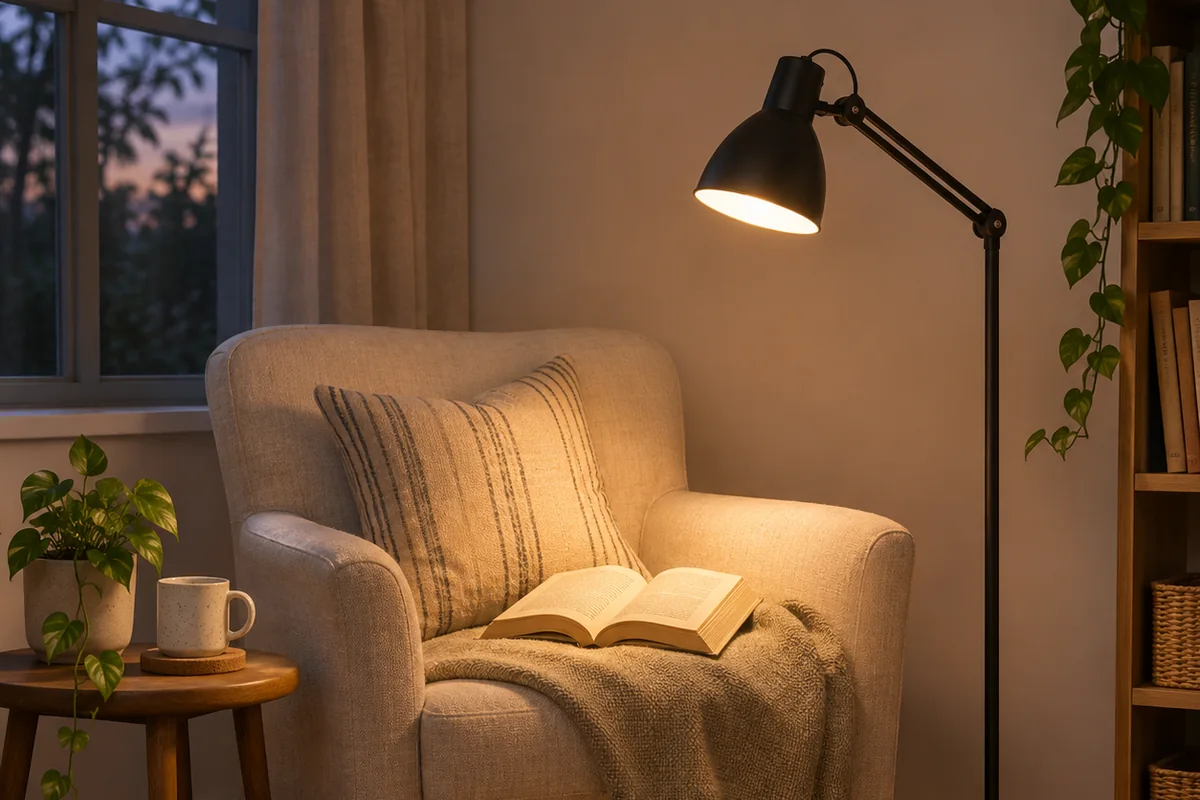
A reading nook can work with a chair, a lamp and somewhere to put a book. Before shopping, decide whether you need light on the page, light around the chair, or both. These are separate jobs. A decorative glow behind a bookshelf may look inviting while leaving the book in your lap poorly lit.
Plan A: one chair and one reading light
Use this arrangement when the rest of the room already has enough background light, or when you want the smallest practical setup.
Place the chair where you can sit and get up without moving the side table. Set an adjustable floor lamp beside it, slightly behind the front of the seat. Aim the head toward the position of your open book. This is a starting position: the useful angle depends on your chair, posture and the lamp’s shade.
Sit normally before adjusting anything else. Open a book, turn a page, lean back and bring the book closer. Check both pages. If your shoulder or hand casts a strong shadow across the text, move the lamp sideways or change the head angle. If you can see the bare light source, adjust the shade or position so you see the lit page instead.
Keep the side table available for the book you have just put down. A floor lamp preserves that surface, but its base needs its own clear place. Make sure the cord reaches a suitable outlet without crossing the route into the chair. Follow the lamp’s instructions for placement and clearances.
Plan B: reading light plus a quiet background
Keep the chair and page light in the same places. Add a second, separately controlled light that illuminates a nearby wall or supplies a soft glow from a side table. Start low and adjust from your seated position. The purpose is to change the atmosphere around the chair; the first light still does the reading work.
Try the two lights independently. With the background on and the page light off, decide whether you like the corner for conversation or listening to music. With both on, reopen the same book and check for a distracting bright spot. If the extra light adds little, remove it from the plan.
| Your starting point | What to keep or add | The check that decides |
|---|---|---|
| The room is lit, but the book sits in shadow | One adjustable reading lamp | Both pages remain readable in your usual posture |
| The book is lit, but you want a warmer-looking corner | Keep the reading lamp; try a separate low background light | You enjoy the second light on its own and can adjust it independently |
| You have one clear spot for a floor-lamp base | Consider a lamp with separately adjustable heads | The heads can serve the actual positions you need without shining toward your face |
| There is no clear floor space | Try a table lamp on an existing stable surface | Its base and switch fit without taking over the place for your book |
When a three-head lamp earns its place
A simple directional lamp is enough if the only missing function is light on a book. App control and color effects are optional. Choose them because you will use them, after the physical position works.
For a corner that needs several adjustable directions from one floor position, Govee Tree Floor Lamp H60B2 (Paid link) is one option to compare. Govee identifies this model as H60B2 and lists three lamp heads with separate on/off, brightness and color controls. The arms and heads can be repositioned manually. Those features let you investigate a page-light setting and a separate wall-light setting without adding a second base.
Check the current product dimensions, assembly instructions and usable angles against your own chair. Three heads do not establish how much light reaches your particular book. Keep any unused head off while you work out the arrangement, and confirm that the controls you intend to use are accessible from the seat.
Walk through one evening setup
Suppose you have an armchair beside a wall, a small table on the right and an outlet behind the chair. Start by keeping the table clear and trying your adjustable lamp on the left. Open a paperback in your lap. If your hand blocks the beam while turning pages, move the head forward or sideways within its allowed movement.
Next, stand up and sit down while holding the book. The lamp base should stay outside that movement, and the cord should remain clear. Finally, switch on the room light you normally use in the evening. If the book and corner already work together, Plan A is complete. If you still want a soft wall glow, trial Plan B before choosing another fixture.
Write down the useful result: lamp position, head direction, controls you can reach, and whether you need a second light. That short specification is more useful for shopping than choosing a lamp from an attractive room photograph alone.
If a glossy magazine reflects the light
A setup that works for a paperback may show a bright reflection on a glossy page. Keep the magazine at a comfortable angle and move the light sideways or adjust its head, checking the reflection after each change. Turning the brightness up does not change the direction of that reflection.
If the lamp cannot move far enough, compare a different shade or a more flexible position before buying more light. Recheck the arrangement with the material you read most often. For a screen elsewhere in the same room, use our small-desk lighting guide to work through monitor reflections and the space your hands need.
For a glow around the whole sofa, see where to put a floor lamp in a small living room.
To add a separate glow around the bookshelf, mock up the strip position and check the sightline first.
Sources & what to check
Source details checked 2026-11-15. Availability and prices can change; use the links below for current information.